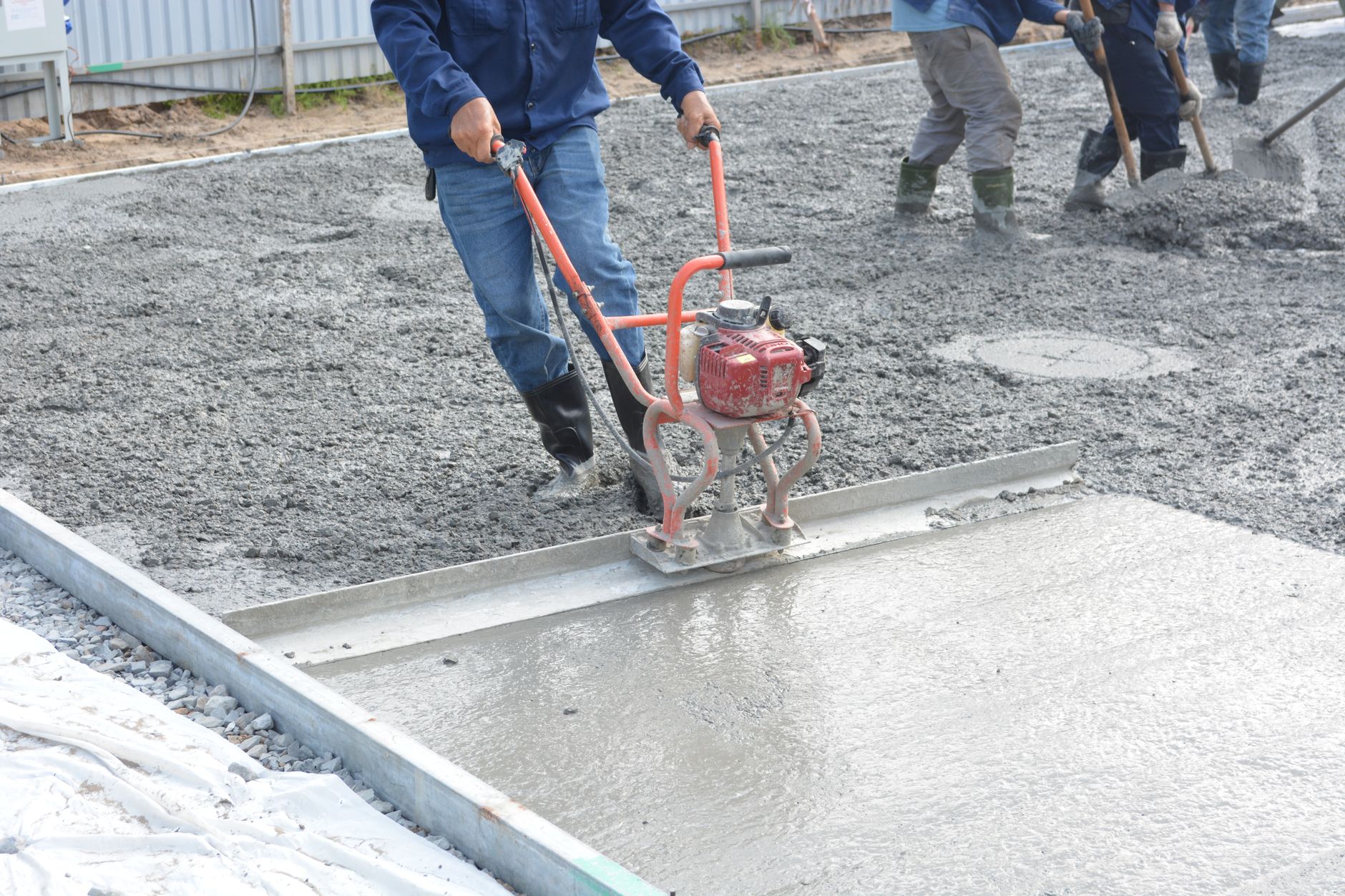
Why the base is everything
A driveway lives or dies on what is under it. The dirt has to be cleared of soft spots, brought to grade, and compacted, and a proper base laid down before a drop of concrete is poured, because concrete is strong in compression and weak when the ground under it shifts. On this coast, and especially in the heavy-clay inland areas like Calallen, the Northwest side, and Robstown, that clay swells and shrinks with the wet and dry seasons, so skipping the base prep is how you get a driveway that cracks in a pattern within a couple of years no matter how good the mix was.
Thick enough for what parks on it
A driveway that only sees a car can be thinner than one where a work truck, a boat trailer, or an RV sits, and the rebar or wire mesh inside has to match. A crew that pours every driveway the same thickness is guessing; a good one asks what parks on it. Underbuilt concrete under a heavy load cracks at the load points, and there is no fixing that after the fact short of tearing it out.
Keeping water out from under it
Water is the other enemy. A driveway needs to shed water off the surface and the grading around it needs to carry water away, because water that pools and works under the slab undermines the base and freezes and thaws at the edges. Good crews slope it right and pay attention to where the runoff goes.
It is unglamorous and it is exactly the part that separates a driveway that lasts from one that does not.
- The base prep decides whether it cracks, not the concrete brand
- Thickness and rebar matter where trucks and RVs park
- Proper drainage keeps water from working under the slab
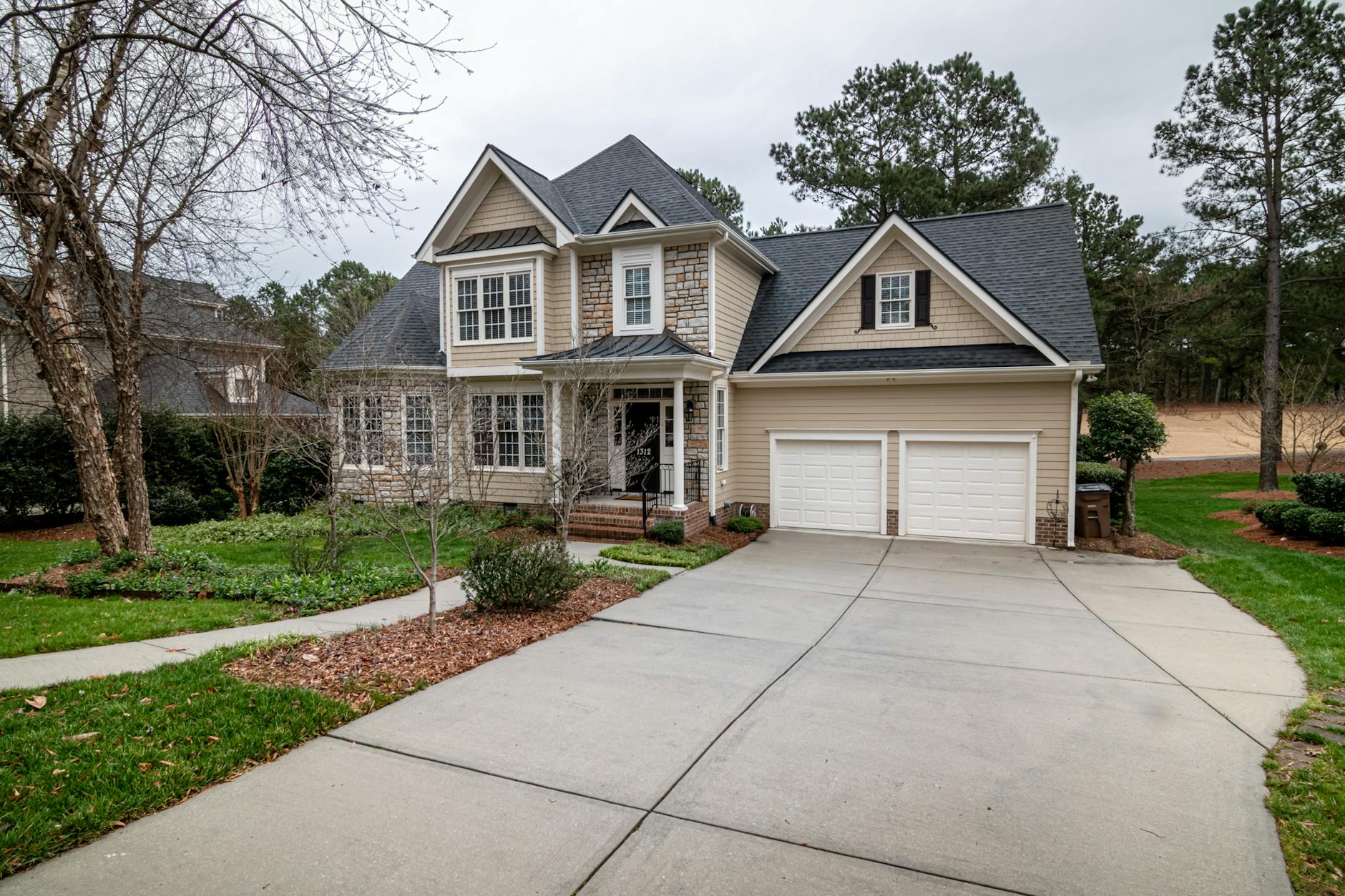
Questions people ask about Concrete Driveways
Do I need rebar, or is wire mesh enough?
Load answers it. A cars-only driveway does fine with proper mesh in a right-thickness slab; work trucks, boat trailers, and RVs call for rebar and more thickness at minimum. Tell the crew honestly what will park there, because underbuilt concrete cracks at the load points and there is no fixing that after.
Why did my neighbor's new driveway crack in the first year?
Almost always the ground, not the concrete: skipped compaction, no real base, poured over soft spots, and on this clay the seasonal swell did the rest. The mix gets blamed because it is visible. The base gets skipped because it is not. Pay for the part you cannot see.
Does a wider driveway need anything special?
Mainly joint planning and consistent base. Bigger slabs move more, so the control joints have to be laid out to manage where cracking wants to happen, and the base has to be uniform so one side does not settle away from the other. It is routine work when it is planned, and a mess when it is not.
New to this? The plain-English guide to ordering walks through what to decide first.