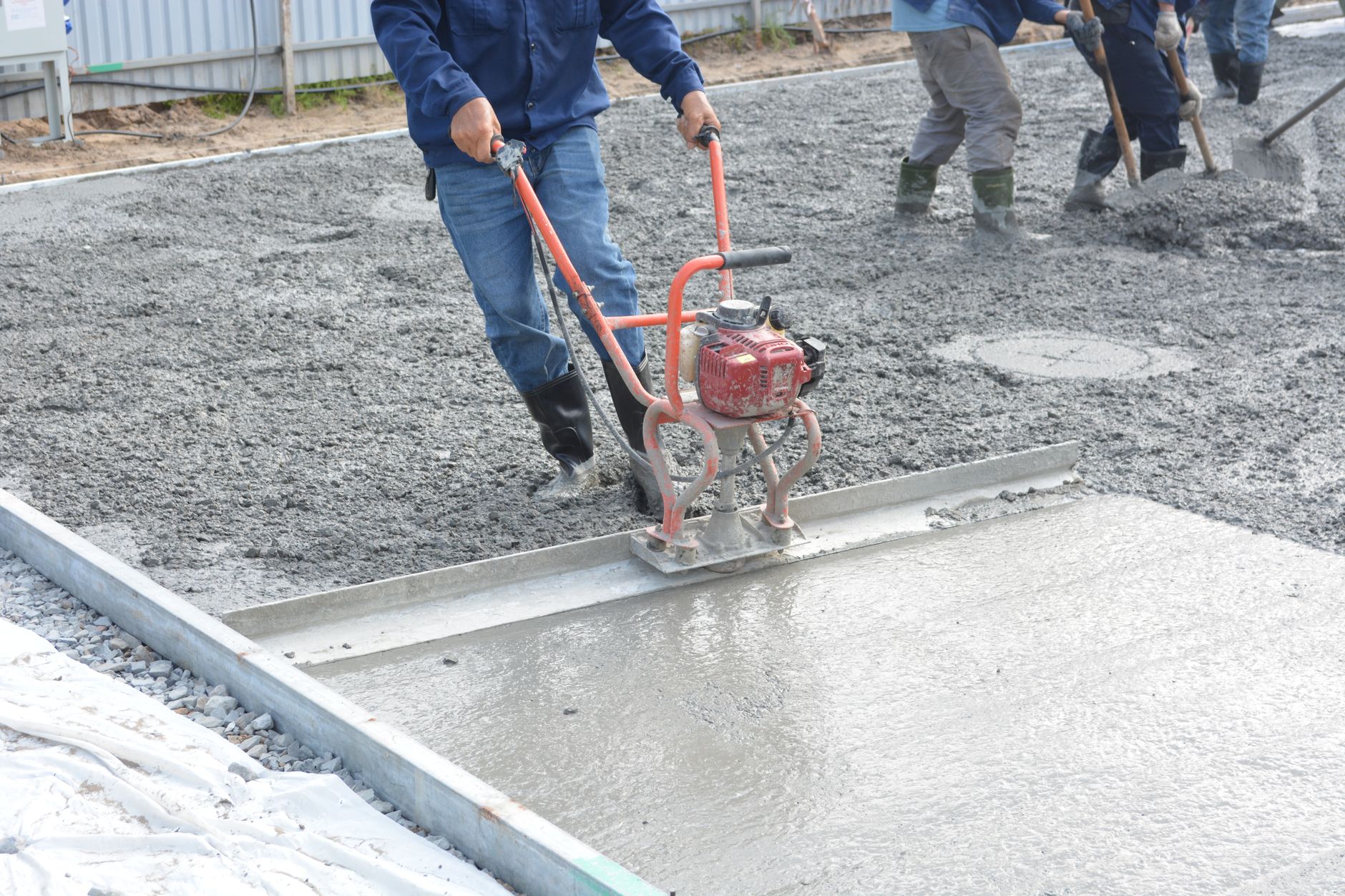
A small patch or short walkway can often get done in a day or two once measurements are set. Bigger pours take longer once you factor in permits, demo, base work, concrete truck scheduling, weather, tight access, and the days it takes to cure properly.
- Deep subgrade compaction to resist shifting in wet coastal clay soils
- Rust-resistant fiberglass or coated steel reinforcement to fight salty Gulf air
- Hand-cut or saw-cut control joints spaced to prevent random surface cracking
- Broom-finish texturing to provide slip resistance during heavy tropical rainstorms
- Custom thickness design for heavy loads like offshore boats and RVs
- Grade leveling and sloping to direct water away from home foundations

Questions people ask about concrete driveway installation
How long do I have to wait before I can safely drive on the new concrete?
You can walk on the surface after one full day. Keep light passenger cars off the driveway for at least seven days. Heavy vehicles, RVs, and boats should wait a full month to allow the concrete to reach its maximum strength.
Is the cost of tearing out and hauling away my old driveway included?
Most professional contractors include excavation and haul-away in their initial proposals, but you should always confirm. The crew will break up your old concrete, load it onto dump trucks, and clear the site before starting the new base preparation.
My driveway is cracking and lifting from tree roots, can it be patched?
If tree roots have lifted and cracked the slab, patching will not work because the roots will keep growing. The damaged section must be ripped out, the roots cut back, and a new slab poured with a barrier to prevent future root intrusion.
Will my HOA or local municipality require a permit for a new driveway?
Cities like Corpus Christi, Portland, and Rockport require permits for new driveways, especially where they connect to public streets. The local contractors we match you with will handle the permit application, coordinate inspections, and ensure the work meets local codes.
How do you protect my lawn and sprinkler heads from heavy equipment?
Crew members map out sprinkler lines before digging and use plywood paths to distribute the weight of bobcats. While some minor turf damage can happen during excavation, professional crews work carefully to minimize impact on your yard.