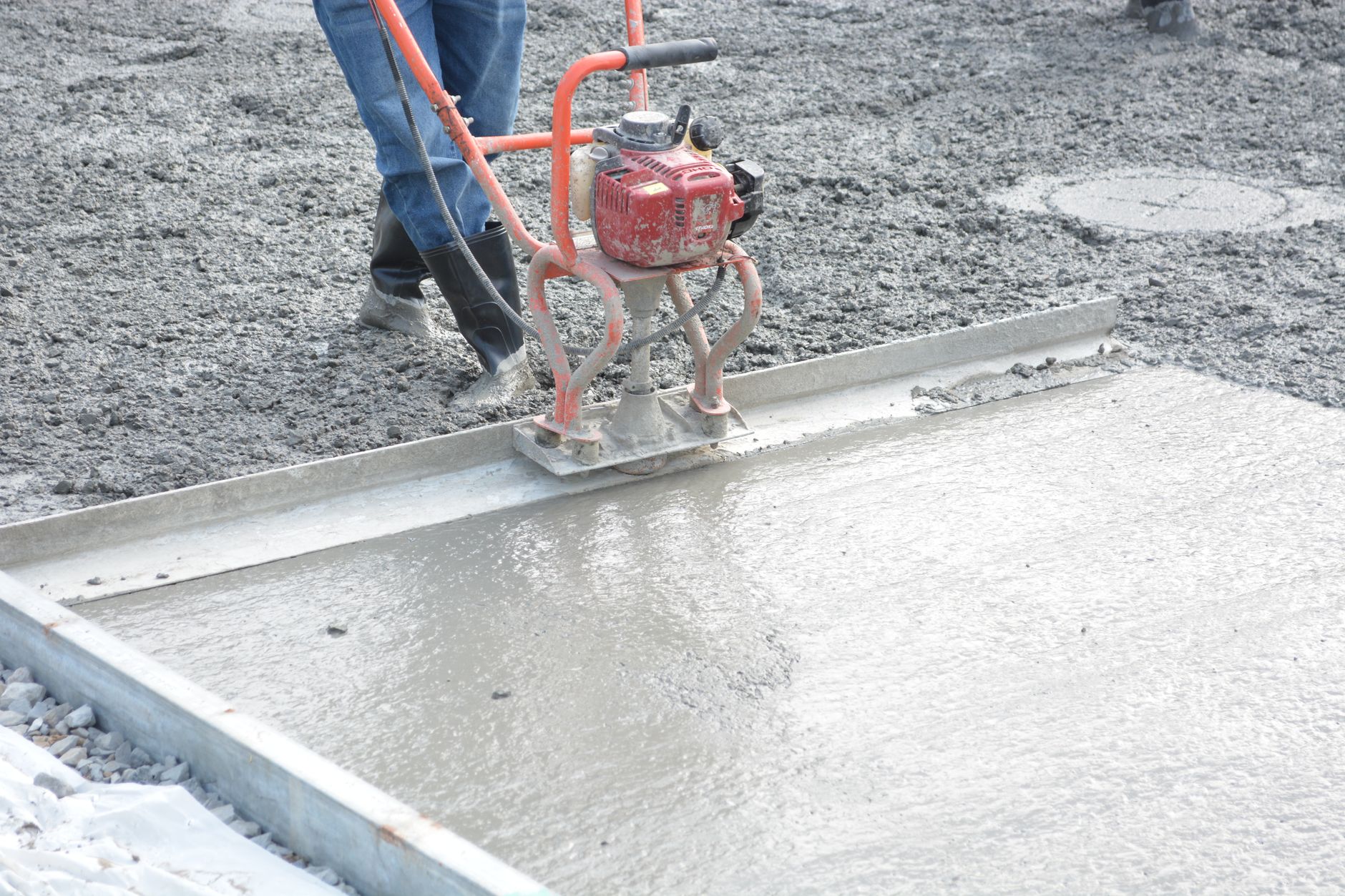
CONCRETE is the default for a reason. Poured properly on ground that was prepared properly, it outlasts everything else and needs almost nothing from you. The catch is that it is one large rigid slab, so when the ground under it moves, it cracks.
On the clay soils common around the Coastal Bend, ground movement is not a maybe. What separates a driveway that lasts twenty years from one that cracks in three is almost entirely what happened before the truck arrived: how the base was compacted, how thick the pour is, where the control joints went.
PAVERS handle movement instead of resisting it. They are individual units on a compacted base, so when the ground shifts the joints absorb it rather than a slab splitting. They can be lifted and reset in one spot instead of replacing a whole section, which matters if a utility ever has to be dug up.
They cost more up front and they need the base done right even more than concrete does, because a bad base shows up as a wavy surface.
ASPHALT is the cheapest to put down and the shortest lived. Heat is what kills it, and there is no shortage of that here. It stays flexible, which means it tolerates ground movement better than concrete, and it also means it softens, ruts under a parked trailer, and needs resealing on a schedule.
For a long rural drive where cost per foot is the whole question, it can be the right call. For a short residential driveway it usually is not.
SALT AIR AND THE COAST change the math. Close to the water, reinforcing steel inside concrete is exposed to a corrosive environment, and rusting steel expands and spalls the surface from the inside. That is a specification question, not a brand question, and any pro who has poured near the bay will bring it up without being asked. If nobody mentions it, that tells you something.
THE QUESTION THAT ACTUALLY SORTS IT: what is under the surface, and who is preparing it. Two quotes for the same driveway can differ by a factor of two and the difference is usually invisible once the pour is finished. Ask what the base is, how deep, and how it gets compacted.
A pro who answers that in detail is quoting a different job than one who will not.
- Concrete resists ground movement; pavers absorb it; asphalt flexes with it
- On clay soils the base preparation matters more than the surface choice
- Pavers can be lifted and reset in one spot; a cracked slab cannot
- Asphalt is cheapest to install and the shortest lived in this heat
- Near the water, ask about reinforcement and corrosion before anything else
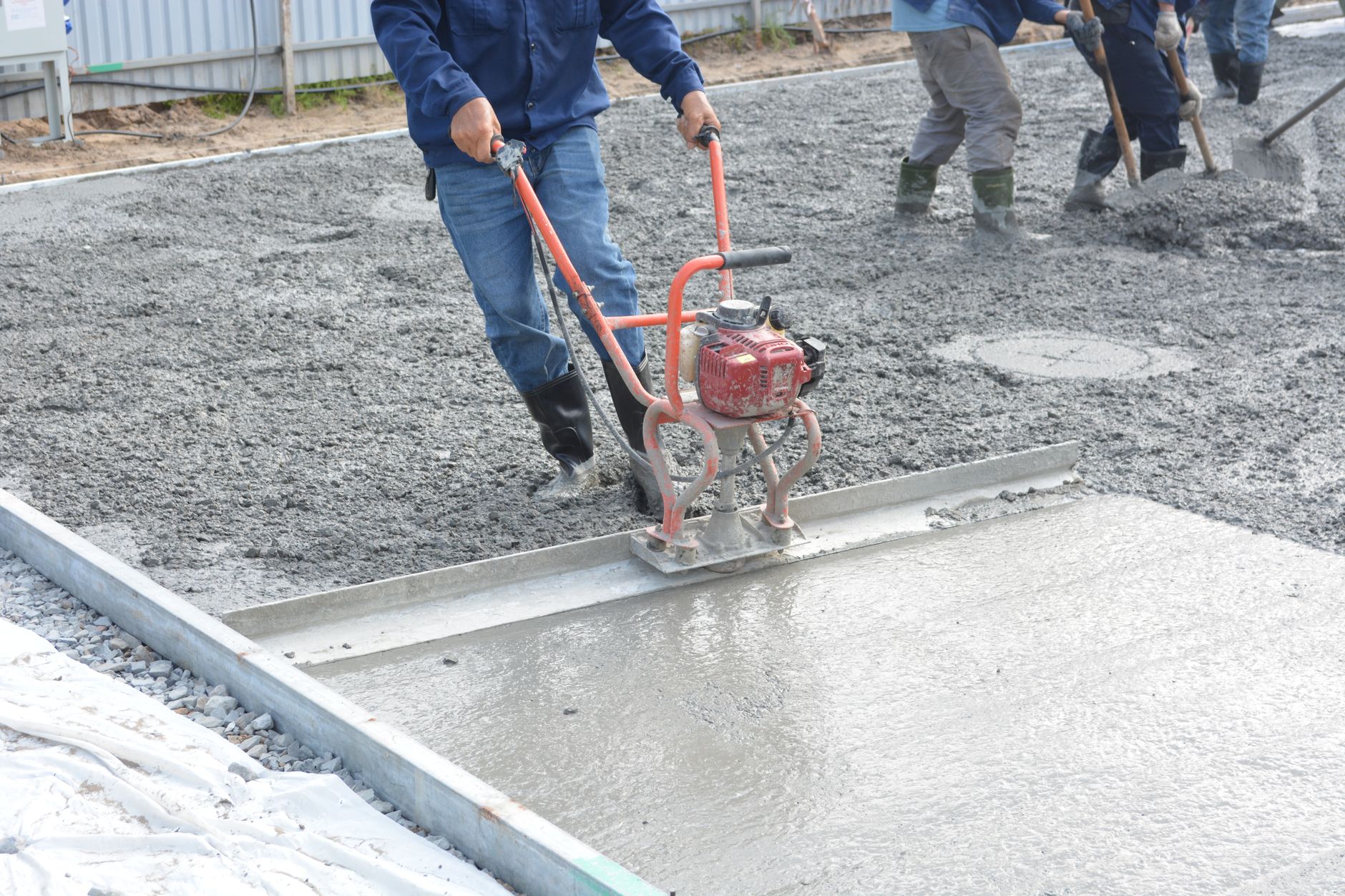
Questions people ask about Concrete, Pavers or Asphalt
Is concrete or asphalt better for a driveway in Corpus Christi?
Concrete lasts far longer and needs less maintenance, which usually makes it the better value on a residential driveway. Asphalt costs less up front and tolerates ground movement better, so it can make sense on a long rural drive where the total footage is the deciding factor.
Why do concrete driveways crack here?
Usually because the ground underneath moved and the slab could not. Clay soils in this area expand and contract with moisture. Proper base preparation, adequate thickness and correctly placed control joints are what let a slab handle that, and all three happen before the concrete arrives.
Are pavers worth the extra cost?
They are if the ground moves or if anything might need to be dug up later, because individual units can be lifted and reset. They are not if the base will be cut, since a poor base shows up faster in pavers than in concrete.
New to this? The plain-English guide to ordering walks through what to decide first.