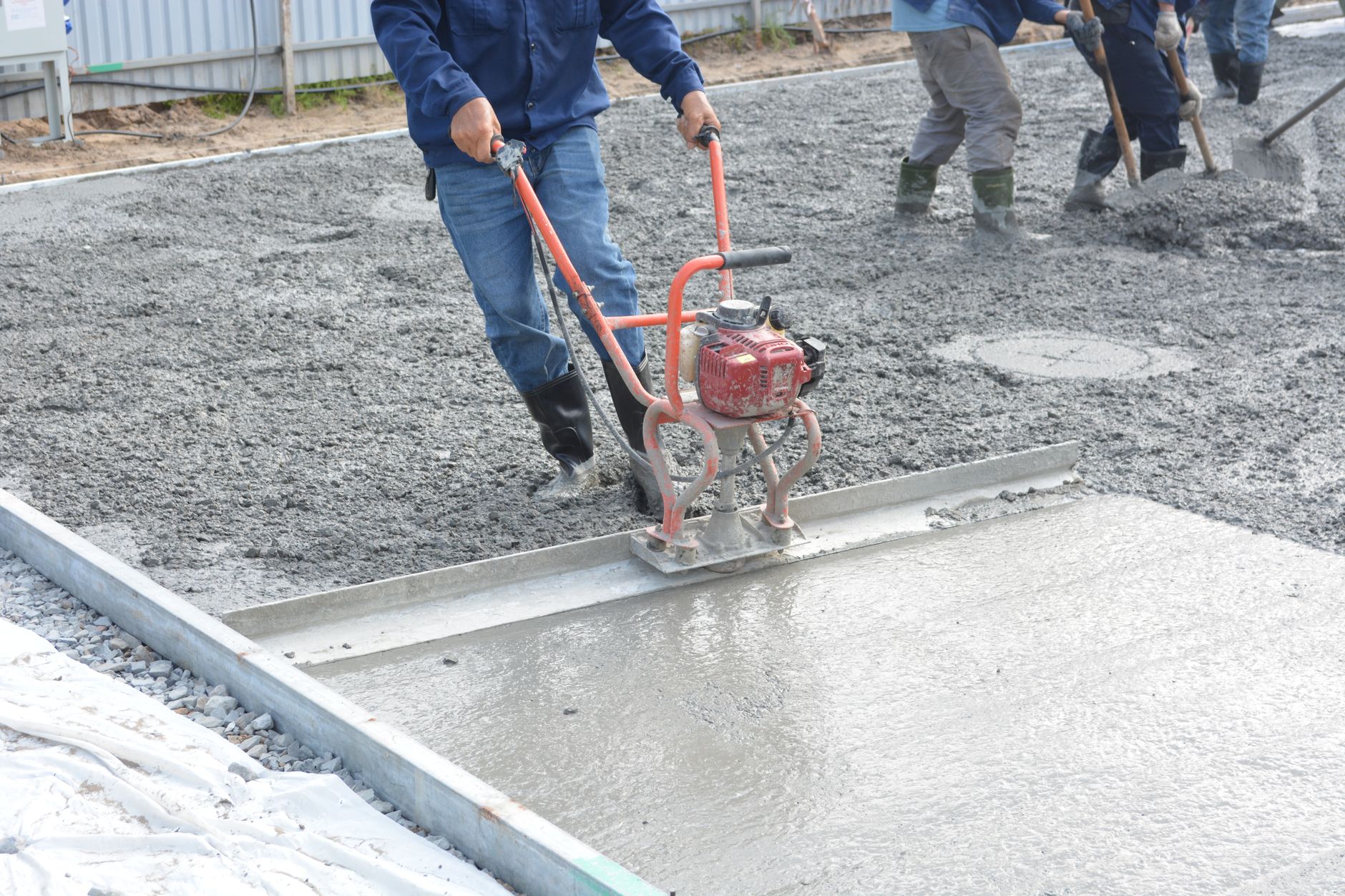
Put the invisible work in writing
Concrete fails from below, and on this clay the compaction, base material, thickness, and steel decide whether your slab lasts, all of it invisible by the afternoon of the pour. Since no license gates this trade, your protection is a written scope that spells out exactly those items: how the ground gets prepared, what base goes down, how thick the pour is, and what steel goes in.
A bid that just says concrete for a price is a bid to cut every one of those corners.
Old work is the only proof
Anyone can photograph a slab the day it was finished; the coast grades it over the next five years. Ask for addresses of driveways or patios they poured at least three years ago, ideally on the heavy clay inland where the ground moves worst, and go stand on them. Uniform hairline cracks are normal life; wide cracks, offsets, and settled corners are the contractor telling you the truth their sales pitch would not.
Insurance and the load question
Confirm liability insurance directly from the carrier, and then ask one revealing question: what do you change about the pour if my truck and boat trailer live on this driveway? A real contractor immediately talks thickness and steel, because load drives design. A contractor who says their standard pour handles anything has just told you there is no design, only a habit.
- No state license exists, so the written scope is your protection
- The base prep must be IN the contract, not assumed
- Ask to stand on work they poured years ago
Questions people ask about How to Choose a Concrete Contractor
What should I check no matter what?
Four things, every time: proof of liability insurance sent directly from their insurer, not a photocopy; how long they have worked this area under this name; local references you can actually call; and a written scope before any money moves. Anyone offended by those four is answering your question.
New to this? The plain-English guide to ordering walks through what to decide first.